
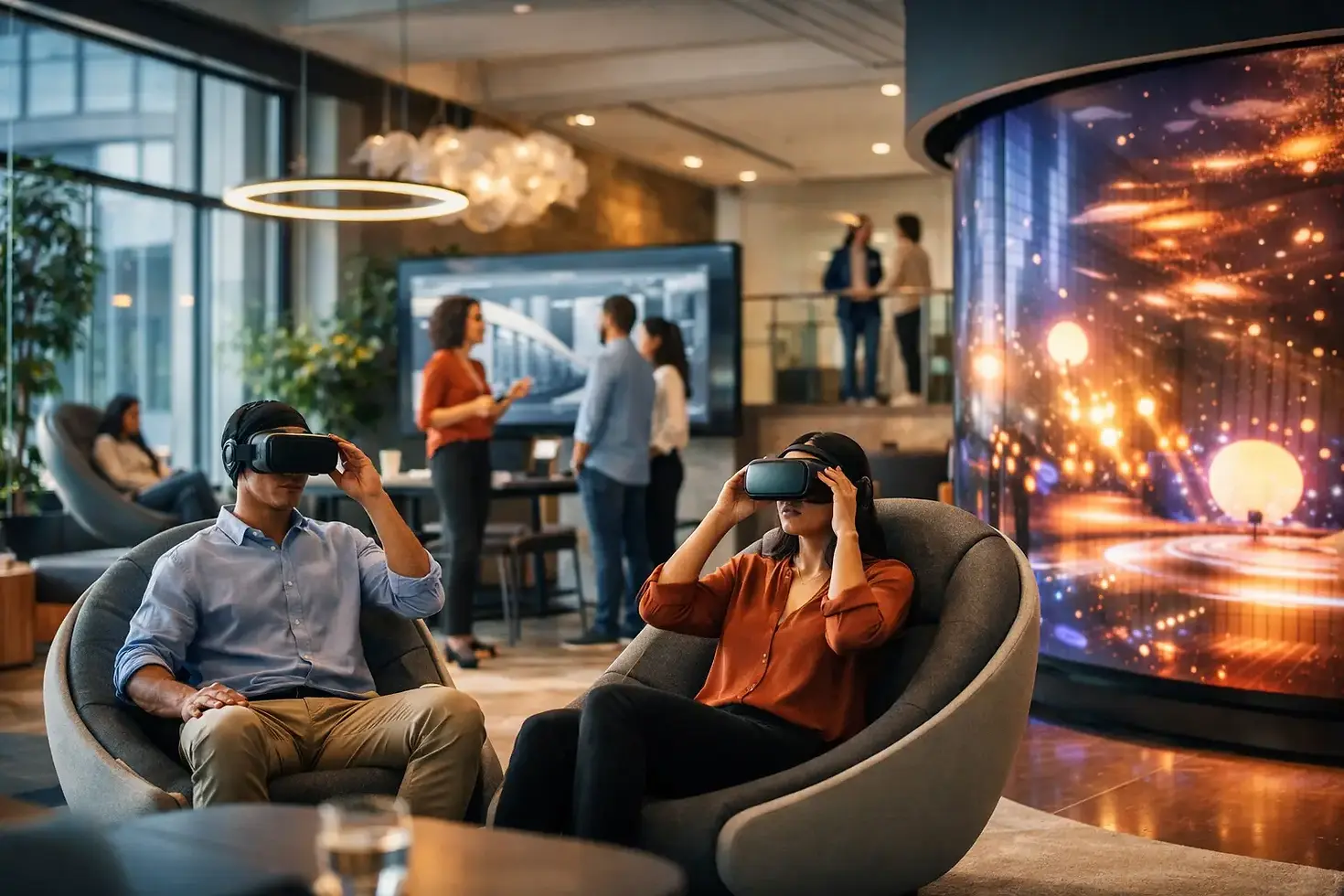
The Future of Experiential Workplaces Is Here
- Menara KEN TTDI
- 4 days ago
- 5 min read
A prestigious business address is no longer defined by its lobby, floor plate, or meeting-room count alone. The future of experiential workplaces is being shaped by environments that give companies, clients, and employees a reason to spend meaningful time there. Work still needs to happen efficiently, but the setting now carries a larger commercial role: it must reflect a brand, support relationships, and create momentum beyond the office door.
For occupiers, this changes the leasing conversation. Square footage remains essential, yet it is only one measure of value. The more revealing question is whether a workplace can help a business attract talent, host clients with confidence, support employee well-being, and remain relevant as working patterns evolve.
Workplaces Are Becoming Business Destinations
For years, commercial real estate was largely organized around separation. Offices were for work. Retail was for transactions. Cultural venues belonged elsewhere, and wellness was treated as an optional benefit. That model is becoming less persuasive for organizations that must earn regular in-person attendance and make every physical touchpoint count.
An experiential workplace brings these functions into a considered ecosystem. It may place offices alongside refined dining, fitness, retail, galleries, performance spaces, and adaptable event venues. The goal is not to fill a building with amenities for their own sake. It is to create a destination where the day can move naturally from a client presentation to a working lunch, a team session, an industry gathering, or an evening cultural program.
This is especially relevant to professional service firms, growth-stage businesses, consumer brands, and regional headquarters. Their premises are not simply operational overhead. They are a visible expression of their standards. When a prospective client arrives, the surrounding environment can either reinforce the quality of the business or reduce the encounter to a routine office visit.
A well-curated destination also creates a stronger rhythm for employees. A team may come in for collaboration, but stay because the building supports the fuller day around that work. Access to quality food, wellness, culture, informal meeting settings, and programmed events can make the office feel less like a compulsory commute and more like a valuable professional setting.
The Future of Experiential Workplaces Is Curated
The strongest experiential workplaces will not be defined by the longest amenity list. They will be distinguished by judgment. A cinema, café, gallery, gym, or event hall only adds value when it is coherent with the building, the tenant community, and the audience it serves.
Curation is what turns mixed-use components into a credible business environment. It means selecting operators that match the quality of the address, programming events with a clear audience in mind, and designing shared spaces that feel intentional rather than decorative. It also means understanding when quiet is the luxury. Not every tenant wants a constant calendar of activity outside its suite.
For building owners, the trade-off is real. More programming requires operational discipline, investment, and a clear point of view. Overly frequent events can disrupt tenants if circulation, access, and sound management are not carefully considered. Retail that does not suit the professional audience can dilute the experience instead of elevating it. Premium positioning depends on consistency, not novelty.
The most successful destinations balance energy with order. They provide moments of cultural relevance and social connection while preserving the discretion, security, and focus expected by corporate occupiers. In practice, this means events should feel like an advantage to the tenant community, not an interruption to it.
Culture Builds a More Memorable Address
Cultural programming has a distinct role in the workplace of the future. It introduces something that conventional office towers struggle to create: a sense of place. Art exhibitions, theatre, design conversations, and community gatherings give a destination character that cannot be replicated by standard finishes or branded coffee counters.
For tenants, this can be commercially useful. A gallery visit or an evening performance offers a more distinctive setting for client hospitality. A flexible venue supports product launches, town halls, panel discussions, training sessions, and private receptions without requiring teams to search beyond their own business address. These experiences make the workplace more shareable, more memorable, and more capable of supporting a company’s external-facing ambitions.
Culture also signals long-term confidence. It shows that a property is invested in the life of its community, not only in the occupation of its units. That message matters to companies competing for talent and brands seeking environments aligned with creativity, credibility, and contemporary urban life.
At Menara KEN TTDI, this proposition is expressed through a multiple platinum award-winning green building that brings office and retail spaces together with The Platform, The Space, KEN Gallery, KEN Museum, dining, and wellness within one considered destination. It demonstrates how commercial practicality and cultural programming can strengthen each other when they are planned as part of one ecosystem.
Flexibility Must Be More Than Movable Furniture
Hybrid work has made flexibility a permanent expectation, but its meaning is often oversimplified. Movable desks and bookable rooms have their place. The more valuable form of flexibility is a building’s ability to support different business moments without compromising quality.
A company may need a focused office environment on Monday, a board presentation on Wednesday, and a large-scale event on Friday. An experiential workplace recognizes these changing requirements. It offers spaces and services that can accommodate different formats, from private discussions and team workshops to public-facing activations and cultural occasions.
This matters because businesses are increasingly careful about what they keep in-house. Rather than leasing large, underused spaces for occasional events, they may prefer access to premier shared venues within the same destination. The right venue infrastructure can reduce logistical friction while giving an event a more polished, destination-led setting.
Yet flexibility should not become an excuse for vague design. Spaces must still be acoustically considered, technically capable, and easy to access. Event infrastructure needs professional management, clear booking processes, reliable service standards, and thoughtful guest circulation. A versatile venue is only premium when it performs reliably under pressure.
Sustainability and Experience Now Belong Together
Environmental performance is no longer separate from tenant experience. A high-performing green building can support healthier interiors, responsible resource use, and a more credible corporate story for the businesses it houses. For organizations with sustainability commitments, the building itself becomes part of their operating narrative.
The practical benefits matter. Thoughtful building design can contribute to comfort, energy efficiency, and long-term resilience. The reputational benefits matter too. Clients, employees, investors, and partners are increasingly attentive to where a company chooses to operate and what that choice suggests about its priorities.
Still, sustainability claims must be specific and meaningful. A few visible green gestures will not satisfy sophisticated occupiers. They look for recognized standards, measurable performance, and a building strategy that connects environmental responsibility with daily quality of life. When those elements align, sustainability becomes an experience people can feel, not merely a statement on a brochure.
What Decision-Makers Should Look For
When evaluating a future-ready workplace, decision-makers should look beyond the suite itself. Consider how the destination supports client experience, employee routines, brand visibility, and the occasional moments that matter most, such as a launch, leadership event, or hosted cultural evening.
The right answer depends on the organization. A finance firm may prioritize discretion, premium meeting environments, and reliable access. A consumer brand may place greater value on event capability, cultural proximity, and visitor traffic. A professional services business may need both: a polished daily setting and the ability to host compelling client occasions without leaving the building.
The most enduring workplaces will be those that make a business feel better connected to the city, its people, and its ambitions. Choose a destination that gives your team a reason to arrive, your clients a reason to remember, and your brand room to be seen at its best.


Comments